
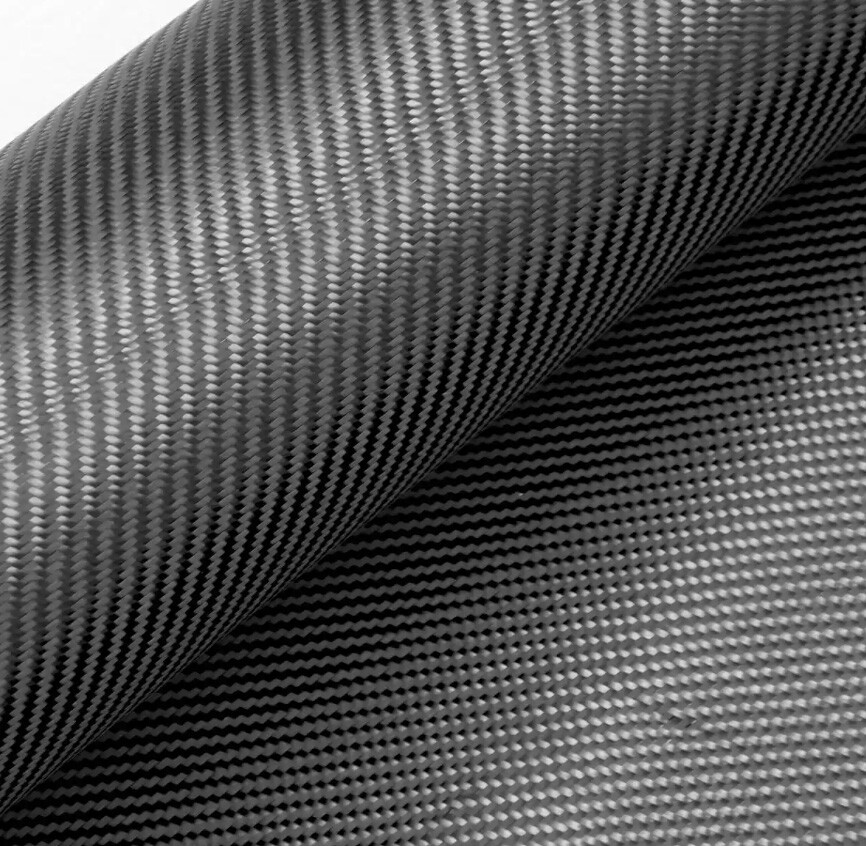
What is carbon fiber? — It's a "fibrous carbon material" with a carbon content of over 90%, not "plastic." Many people mistake carbon fiber for "high-grade plastic," but its nature and manufacturing process are quite unique. These three points are fundamental to understanding it: 1. Essence 1: Composition – Contains over 90% carbon, neither "metal" nor "plastic" The core of carbon fiber is "carbon," but not the common block carbon (such as charcoal or graphite), but fibrous carbon material. Simply put, it's made by processing "carbon-containing organic fibers" (such as polyacrylonitrile fiber, or PAN precursor) to remove elements other than carbon (such as hydrogen and oxygen), ultimately obtaining "thin, long carbon filaments" with a carbon content of over 90%, and a diameter of only 5-10 micrometers (thinner than a human hair). Key differences: It is not a metal (such as aluminum or steel), and does not have the weight and conductivity of metals (some types are conductive); nor is it a plastic (such as ABS or PP), as plastics have low carbon content and are not heat-resistant, while carbon fiber is heat-resistant and has high strength. The two are completely different materials. Essence 2: Manufacturing Process – More than 10 processes, with "carbonization" being the key, determining performance. Carbon fiber isn't something you can just spin and use; it requires a complex process. Carbonization is the core step that gives it its lightweight and strong properties. Simplified, it involves four key steps: ① Spinning: Spinning PAN precursor fibers (or other organic fibers) into long, thin fibers, similar to spinning cotton thread; ② Pre-oxidation: Heating the spun fibers in air at 200-300℃ to stabilize the fiber molecules and prevent breakage during subsequent carbonization. ③ Carbonization: The pre-oxidized fibers are placed in an air-isolated furnace (to prevent combustion) and heated to 1000-1600℃ to remove hydrogen, oxygen, and other elements from the fibers, leaving only carbon. At this point, the carbon content reaches over 90%, and the fibers begin to possess high strength. ④ Graphitization (optional): For even higher performance (such as greater heat resistance), the fibers are further heated to 2000-3000℃ to make the carbon molecules arrange themselves more regularly (like graphite), achieving a carbon content close to 100%, but this doubles the cost. Why is it expensive? A single carbon fiber is as thin as a hair, and thousands of them need to be woven into "carbon fiber cloth" before it can be used (for example, to make fishing rods or bicycle frames). In addition, the process is complex and energy consumption is high, so the cost is naturally much higher than that of aluminum and steel. 3. Essence 3: Form – Mostly “fabricated or composite materials”, rarely used alone Pure carbon fiber is very brittle (like thin glass filaments, it breaks easily when bent), and is rarely used alone. In practical applications, carbon fiber is combined with resin (such as epoxy resin) to make “carbon fiber composite material” (CFRP). This retains the lightness and strength of carbon fiber and the toughness of resin, making it less prone to brittleness. Common forms: carbon fiber cloth (woven into a fabric shape for lamination and molding, such as car body shells), carbon fiber prepreg (cloth that has been impregnated with resin before being directly cut into shape), carbon fiber profiles (such as tubular profiles for fishing rods and bicycle frames). The "carbon fiber products" we usually see are actually all this type of composite material. |
Navigation
Send Us A Message